Overview: Working in a team of three, developed a low cost, pulsed bistatic 2.4GHz radar system utilized to accurately measure distances of objects using time domain reflectometry. 3D printing was used to reduce costs and enhance flexibility. The final radar accurately measured distances up to 3 meters (10ft).
Skills: RF Signal Processing, Ansys HFSS, VNA, Onshape, Python.
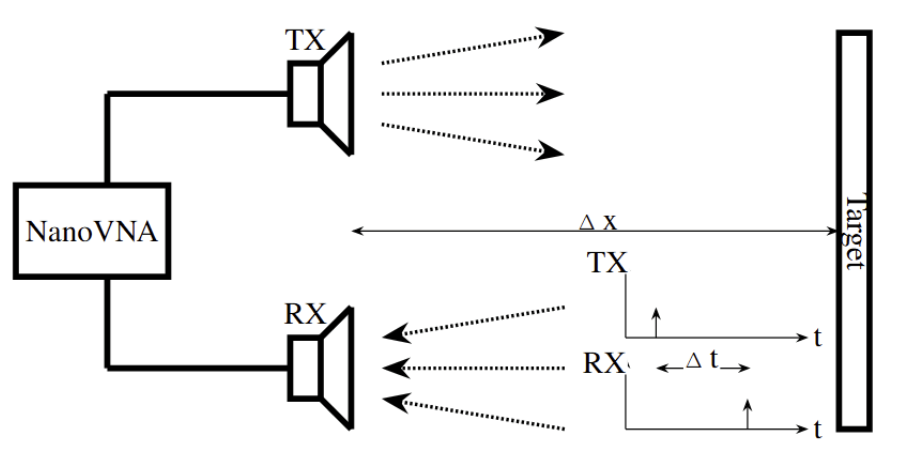
The design of a bistatic radar involves two separate transmit (TX) and receive (RX) antennas, as seen in the diagram below. The operating principle is simple: an EM wave is sent by the TX antenna toward a target and reflects into the RX antenna. If the TX and RX antenna are near each other, the distances between the target and each of the antennas are approximately equal; in this case, distance is approximately equal to c * (t / 2), where c is the speed of light in the medium, and t is the total flight of the EM wave (divided by two to cover round trip).
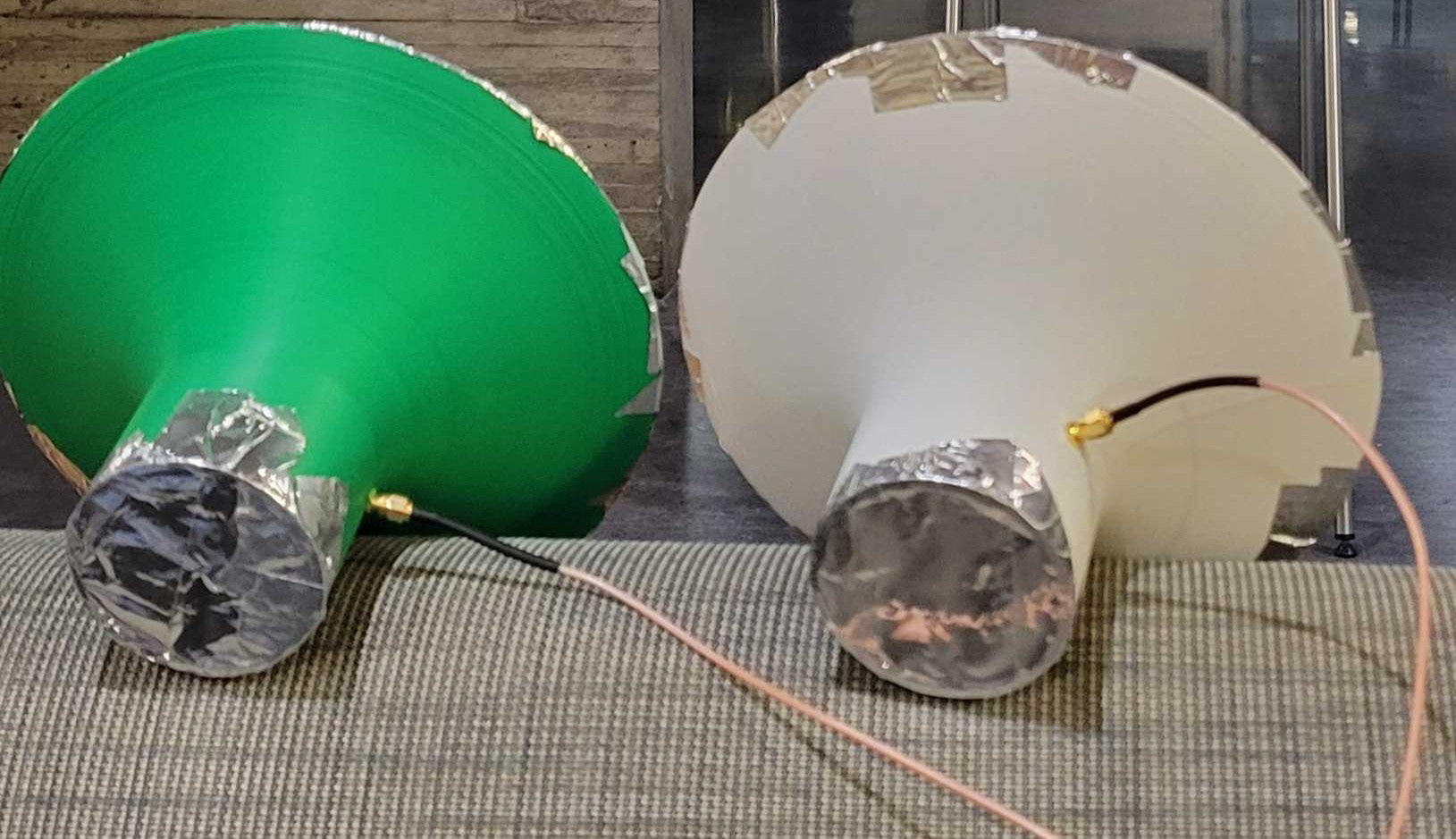
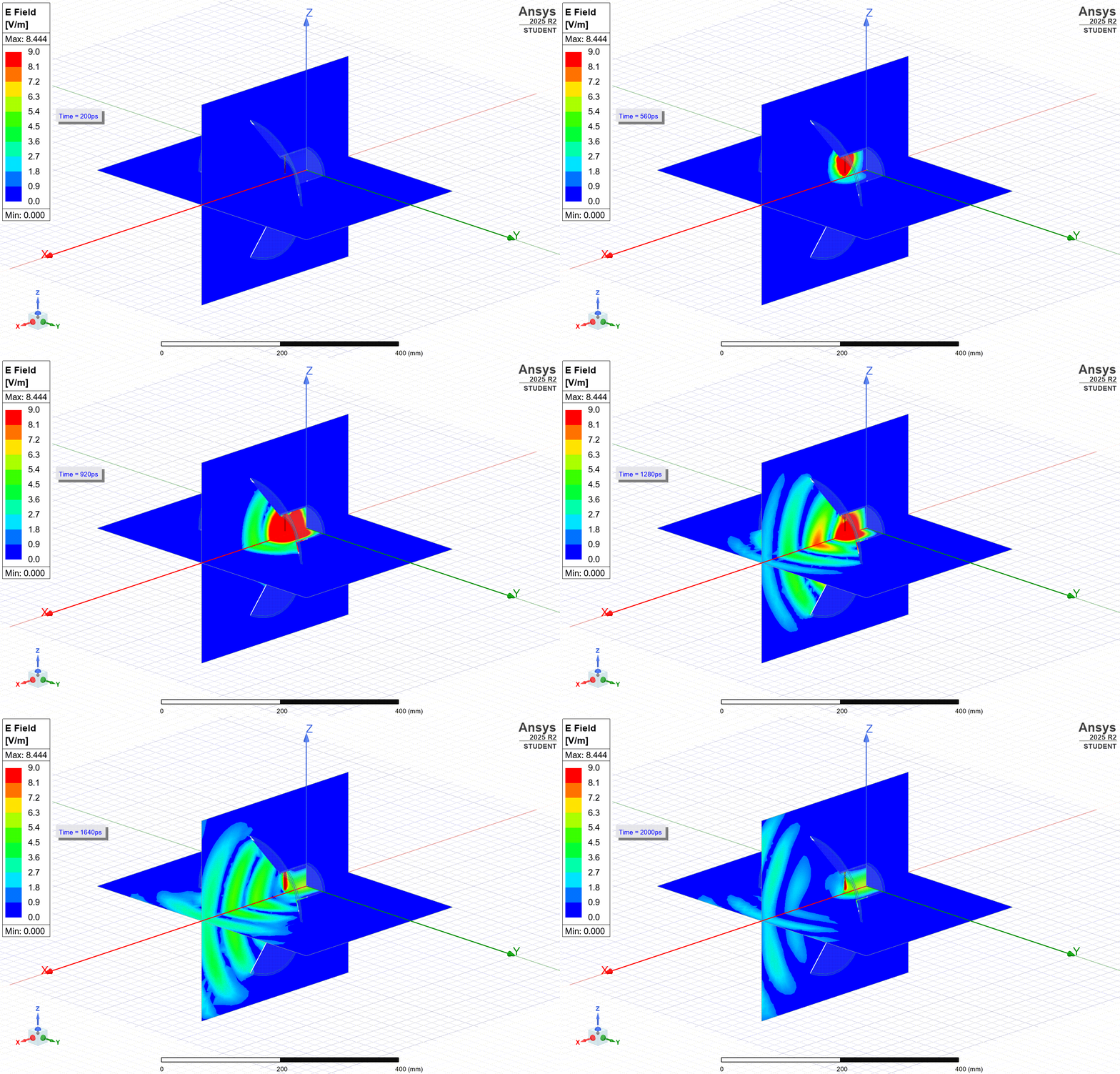
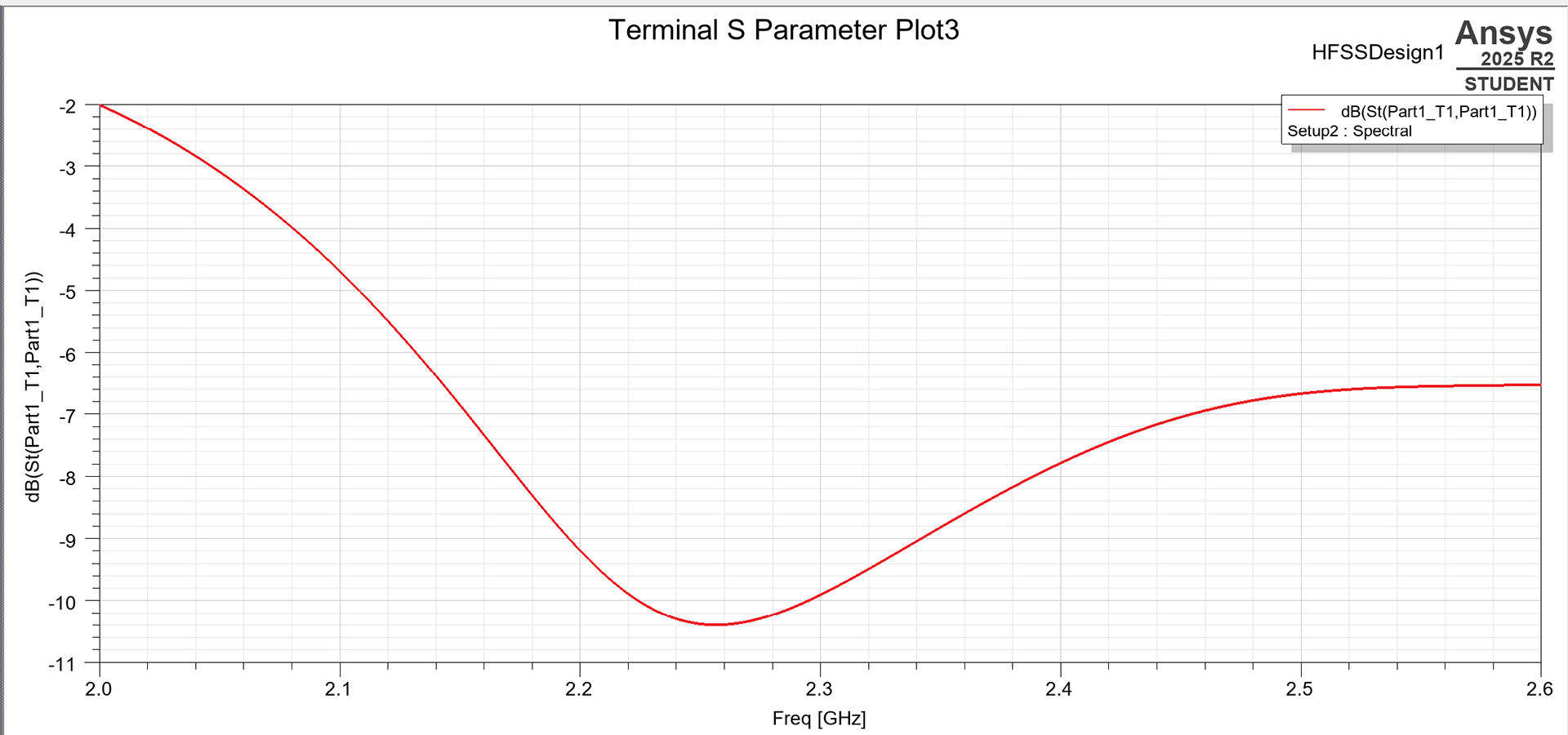
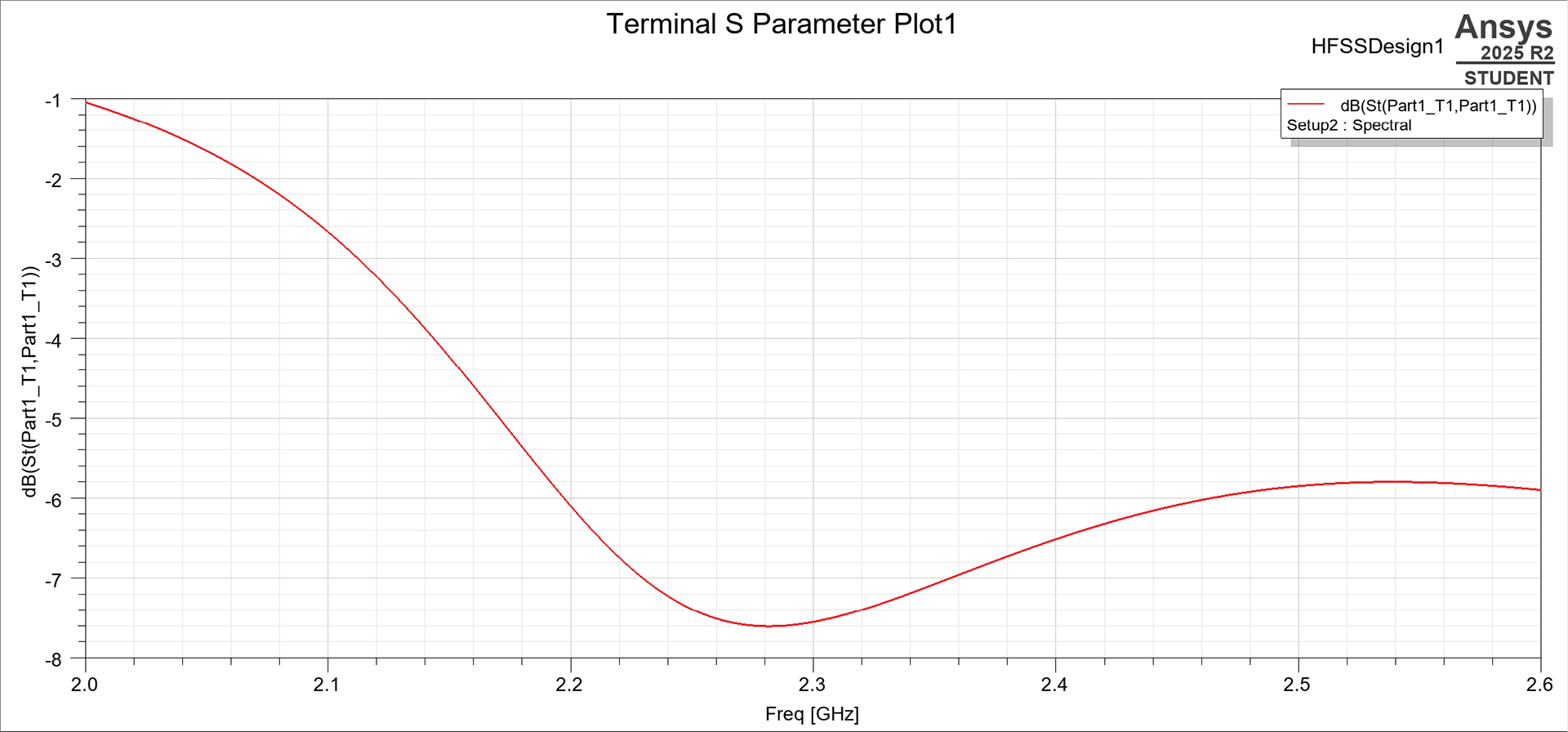
The antennas were selected to be horn antennas due to their highly directive performance in a simple form factor. They were designed in CAD utilizing parametric design techniques in Onshape to be 3D printed for rapid iteration and design flexibility, enabling cad updates by changing variables. The designed antennas were then simulated in Ansys HFSS (seen below for simulated S11 for conical and exponential, respectively) to validate directive performance and operating frequency.
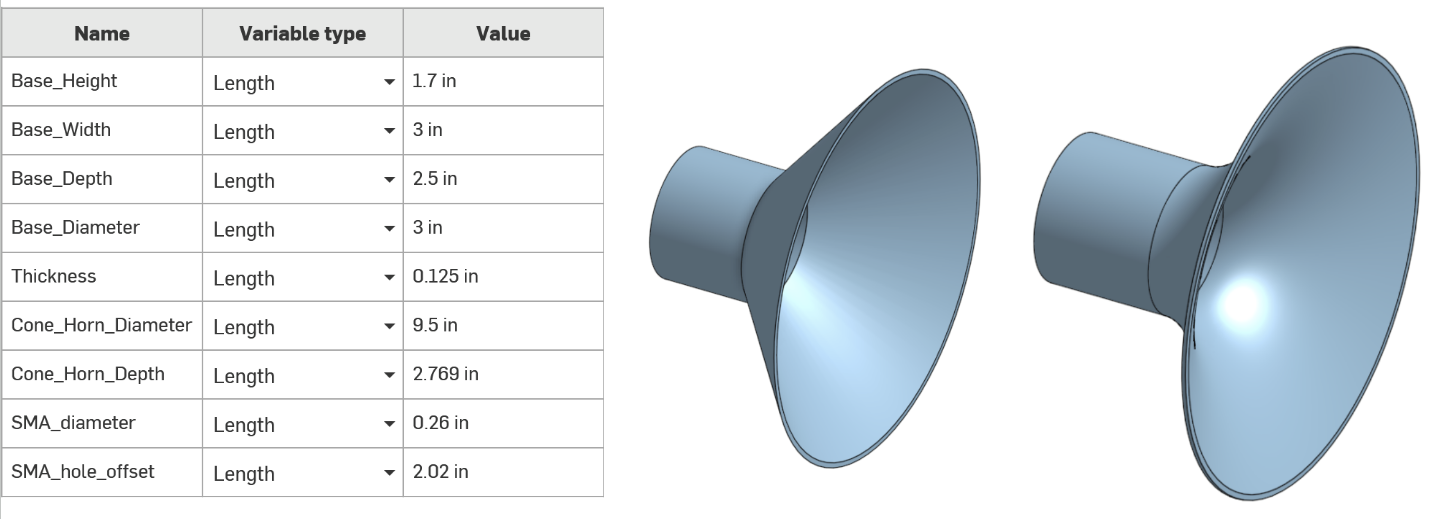
After printing, aluminum foil tape was utilized to make the antennas conductive (notably, more conductive but more expensive copper tape was not needed due to the tape being thicker than the skin depth of a 2.4GHz wave in either copper or aluminum). A quarter wave feed made of 30AWG wire was mounted to an SMA connector inside the antenna, and then the feed length was iteratively adjusted to optimize reflected S11.
A custom GUI was developed utilizing Python and the ImGui library, which utilized Inverse Fast Fourier Transform (IFFT) to transform from frequency domain to time domain, as well as background filtering, and a waterfall diagram. The GUI supported SOLT (Short Open Load Through) calibration to compensate for feed cables.
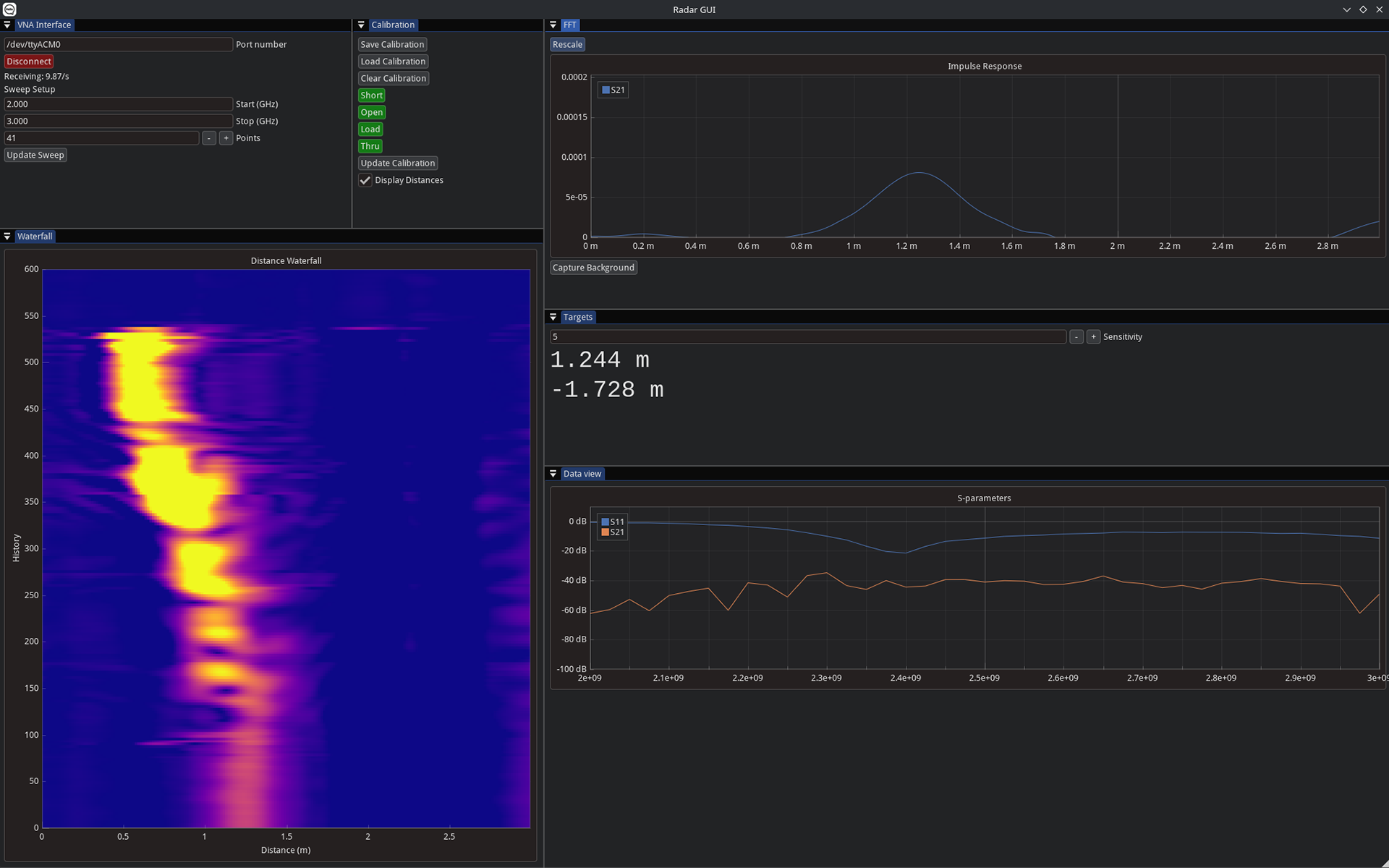
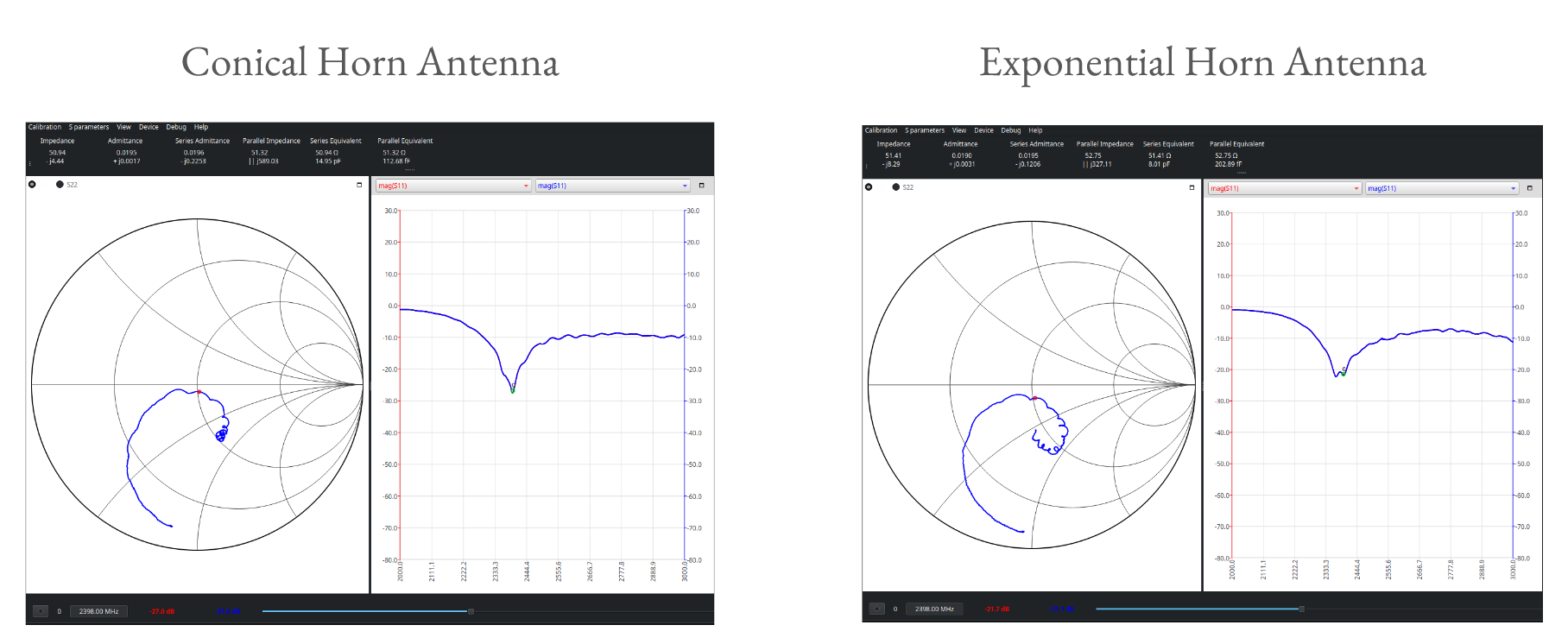
In testing of the antennas, we found high precision in both the conical (shown left) and exponential design (shown right), reflecting that of the Ansys HFSS simulations. The conical antenna was slightly more accurate, with less than 30mm RMS error. The total cost of the system was < $200.00, demonstrating a feasible low cost radar-system.
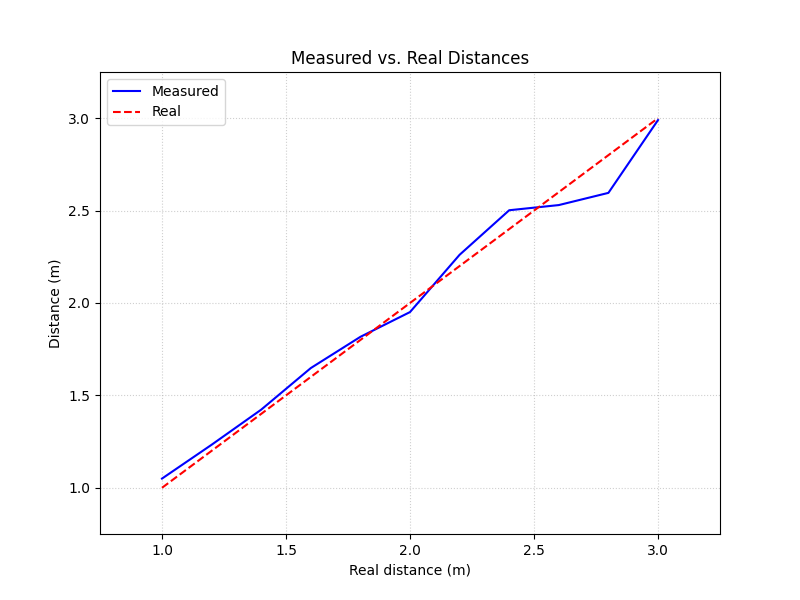
Conical Antenna Measured vs. Real Distances
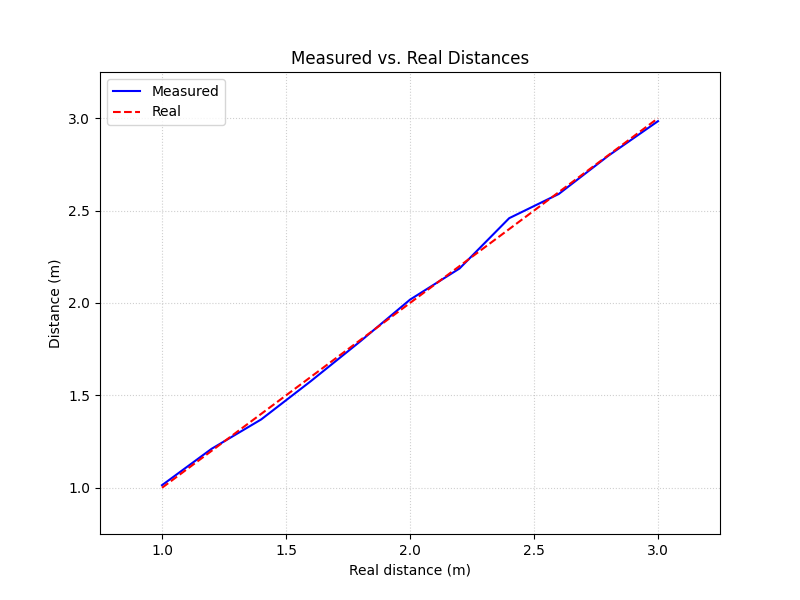
Exponential Antenna Measured vs. Real Distances